

A kitchen remodel doesn’t have to drain your savings. With the right strategy, you can transform the hardest-working room in your home for a fraction of what you might expect. The secret isn’t cutting corners; it’s knowing exactly where to spend, where to save, and which upgrades deliver the biggest visual payoff per dollar.
At Swift Run Renovations, we help Richmond homeowners remodel kitchens on real-world budgets every day. The homeowners who get the most for their money aren’t the ones who spend the least; they’re the ones who spend intentionally. Below are 12 proven tips for remodeling a kitchen on a budget, the mistakes that quietly blow budgets, and how to know when doing it yourself will actually cost you more.
Start With a Realistic Budget (and a 15% Cushion)
Before you pick a single tile, decide what you can comfortably spend, then set aside about 15% of that as a contingency for surprises. Older Richmond homes in particular can hide outdated wiring, failing plumbing, or water damage behind the walls, and these issues have a way of revealing themselves the moment demolition starts. A cushion keeps an unexpected find from turning into a stalled project or a maxed-out credit card.
Once you have a number, split your wish list into “must-haves” and “nice-to-haves.” Be honest about the difference. The must-haves are the things that make the kitchen function for your daily life; the nice-to-haves are the upgrades that would be pleasant but won’t change how you cook and live. This single exercise keeps your spending focused when temptation strikes at the showroom, and it’s the foundation of every successful budget remodel.
Where to Save vs. Where to Splurge
The homeowners who stretch a budget furthest all follow one rule: spend on what you touch and use every day, and save on everything else.
Worth splurging on are the elements you interact with constantly and that take the most abuse: your countertops, your faucet, your cabinet hardware, and a quality sink. These are the pieces you’ll feel every single day, and cheaping out here tends to show quickly through wear, staining, or that flimsy feel of a bargain fixture.
Easy to save on are the elements where budget and premium options often look nearly identical once installed: appliances (mid-range models perform beautifully for most families), backsplash tile, and light fixtures. A $40 pendant light and a $200 pendant light can look strikingly similar over an island, and no buyer or guest will ever inspect the brand.
12 Ways to Remodel Your Kitchen on a Budget
1. Keep your existing layout. Moving the sink, stove, or gas lines means rerouting plumbing and electrical the single fastest way to blow a budget. Working within your current footprint can save thousands and shave weeks off your timeline. A fresh look rarely requires a new layout.
2. Reface or repaint your cabinets. Cabinets are usually the biggest expense in any kitchen, but if the boxes are structurally sound, you don’t need to replace them. Refacing (new doors and drawer fronts) or simply painting them and adding modern hardware can make them look brand new for a small fraction of replacement cost.
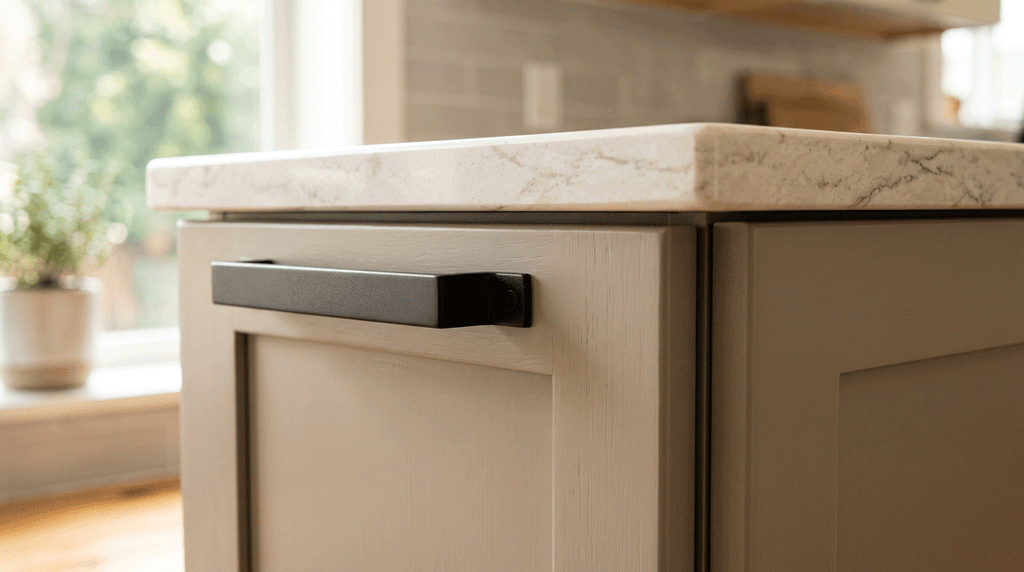
3. Swap the hardware. New handles and pulls are one of the cheapest, highest-impact updates in any kitchen. A set of modern matte-black or brushed-brass pulls can instantly bring dated cabinets into the current decade for very little money.
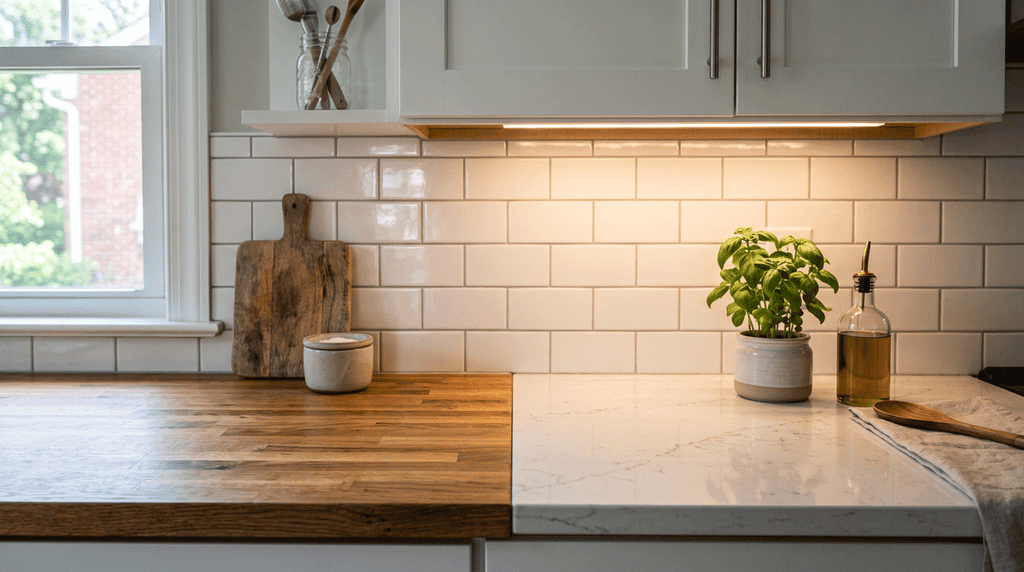
4. Choose budget-friendly counters that look high-end. You don’t need a premium stone slab to get a premium look. Quartz remnants, butcher block, and today’s high-quality laminates all deliver style at a lower price. Because a small kitchen needs less square footage of counter, this is an area where a modest upgrade goes a long way.
5. Open up storage with shelving. Replacing a few upper cabinets with open wood shelves cuts material cost and creates an airy, current look that photographs a bonus beautifully if you ever sell.
6. Add a backsplash you can afford. Classic subway tile is inexpensive and timeless, and peel-and-stick options give a polished finish for even less. A backsplash is a small area with a big visual return.
7. Refresh the flooring with vinyl plank. Luxury vinyl plank (LVP) looks remarkably like hardwood, resists moisture and scratches, and costs far less than real wood or tile. It’s one of the best value-per-dollar upgrades available.
8. Update the lighting. Swapping dated fixtures for modern LED lighting instantly modernizes a kitchen. Adding under-cabinet LED strips is inexpensive and makes the whole space feel custom.
9. Keep the appliances you don’t need to replace. If your refrigerator or dishwasher still works well, hold onto it. There’s no rule that every appliance must be replaced at once; upgrade the worn-out ones now and the rest later.
10. Shop sales and floor models. Timing appliances and material purchases around holiday sales events can save hundreds of dollars. Floor models and open-box appliances often carry deep discounts for cosmetic flaws you’ll never notice once installed.
11. Handle your own demolition carefully. Tearing out old cabinets and flooring yourself can trim labor costs meaningfully. Just leave anything involving plumbing, gas, or electrical to the professionals, where a mistake gets expensive fast.
12. Phase your project. You don’t have to do everything at once. Tackle the essentials now the layout, cabinets, and counters and save cosmetic upgrades like a new backsplash or lighting for a later phase. A phased plan spreads cost over time without sacrificing the final result.
Budget Mistakes That Cost You More
Saving money is as much about avoiding pitfalls as chasing deals. The most common budget-killers we see are:
- Changing your mind mid-project. Every change after demolition begins adds cost and time. Finalize your plan and selections before work starts.
- Buying the cheapest materials available. Rock-bottom cabinets and counters often fail early, warping or chipping within a couple of years, meaning you pay twice.
- Skipping professional help on plumbing and electrical. DIY mistakes in these trades are expensive to fix and can be genuinely dangerous.
- Ignoring permits. Unpermitted work can create real problems when you sell, sometimes forcing you to redo or disclose it. When in doubt, ask a contractor what your project requires.
When to Bring in a Professional
DIY has its place, but a skilled contractor often saves you money in the long run by getting the job done right the first time, sourcing materials at better prices than retail, and keeping the project on schedule so you’re not living without a kitchen for months. A good remodeler will also tell you honestly where your budget is best spent and where you can pull back.
Our team walks through your vision and budget before any work begins, then delivers a transparent, itemized estimate so you can see exactly where every dollar goes. You can learn more about our kitchen remodeling services in Richmond and how we help homeowners maximize value.
Get More Kitchen for Your Money
A beautiful, functional kitchen is absolutely within reach on a sensible budget; you need a plan and the right team. Whether you’re refreshing a rental, updating a starter home, or reimagining your forever kitchen, we’ll help you prioritize the upgrades that matter most and skip the ones that don’t.
Ready to start? Contact Swift Run Renovations for a free, no-pressure consultation with Richmond’s trusted kitchen remodel experts. And if you’re thinking bigger picture, explore our full range of remodeling services to phase your dream home over time.
Frequently Asked Questions
Can you remodel a kitchen on a small budget?
Yes. By keeping your existing layout, refacing or painting cabinets, choosing budget-friendly countertops, and updating hardware, lighting, and the backsplash, many Richmond homeowners refresh their kitchens for well under the cost of a full gut renovation. The key is to focus your spending on high-impact, low-cost upgrades and leave expensive structural changes, like moving plumbing, for another day.
What is the cheapest way to update a kitchen?
The most budget-friendly updates are painting cabinets, swapping hardware, adding a new backsplash, and updating light fixtures. Together, these cost a small fraction of a full remodel while dramatically changing the look and feel of the room. Adding luxury vinyl plank flooring is another high-value, low-cost upgrade.
Should I paint or replace my kitchen cabinets?
If your cabinet boxes are solid and well-built, painting or refacing them is far more cost-effective than replacing them and can look just as fresh. Full replacement makes sense only when cabinets are damaged, warped, structurally failing, or when you need to change the layout entirely. For most budget remodels, refacing is the smarter path.
How much should I set aside for a kitchen remodel contingency?
Plan for roughly 10–15% of your total budget as a contingency for unexpected issues, such as outdated wiring, hidden water damage, or plumbing surprises. Older Richmond-area homes are especially prone to behind-the-wall surprises, so this cushion keeps an unexpected discovery from derailing your project or your finances.