

If you’re weighing whether to finish your basement, you’re probably asking the practical question every smart homeowner asks: will it actually pay off? A basement finish is a significant investment, so it’s worth understanding exactly how much value it adds both at resale and in your day-to-day life before you commit.
Here’s the quick answer: a finished basement typically returns about 70–75% of its cost at resale, and it adds usable living space you get to enjoy the entire time you own the home. In the Richmond market, where buyers place real value on flexible living space, a well-finished basement is a strong selling point that helps a home stand out. Let’s look at what drives that return and, more importantly, how to maximize it.
How a Finished Basement Adds Value
A finished basement creates value in two distinct ways, and both matter when you’re evaluating the investment:
Immediate use value. From the day it’s finished, you gain a family room, home office, gym, guest suite, playroom, or whatever your household needs most. That’s daily value you enjoy for years before you ever think about selling. Unlike some renovations that are purely about resale, a finished basement improves your life the entire time you live there.
Resale value. When it’s time to sell, a finished basement makes your home more attractive and often commands a higher price. Buyers see move-in-ready bonus space and are willing to pay for it, especially compared to a competing home with a dark, unfinished basement they’d have to develop themselves. In a competitive listing, that finished space can be the difference that wins an offer.
What ROI Can You Actually Expect?
Most finished basements recover roughly 70–75% of their cost at resale, though the exact return depends on several factors we’ll cover below. But that percentage alone doesn’t tell the whole story, because it only accounts for the resale side of the equation. It doesn’t capture the years of use and enjoyment you get in the meantime value that a simple ROI figure can’t measure.
When you combine the resale return with the daily livability, a finished basement is one of the better-value projects a homeowner can take on. It’s also worth noting that finishing a basement often costs less per square foot than a home addition, which means you’re adding functional living space at a relatively efficient price. That efficiency is a big part of why the return on investment holds up so well.
Factors That Affect Your Basement’s ROI
Not every finished basement returns the same amount. These factors make the biggest difference in how much value you’ll recover:
Quality of the finish. Professional, code-compliant work with durable materials holds its value. A cheap or amateur finish that looks unfinished, uneven drywall, mismatched flooring, or exposed elements can actually deter buyers and undercut your return.
Whether it counts as living space or a basement that adds to your home’s official square footage and appraised value, it needs to meet the definition of “finished”: proper walls, ceiling, and flooring, a permanent heat source, and safe, code-compliant access. A space that doesn’t meet these standards won’t be credited the same way.
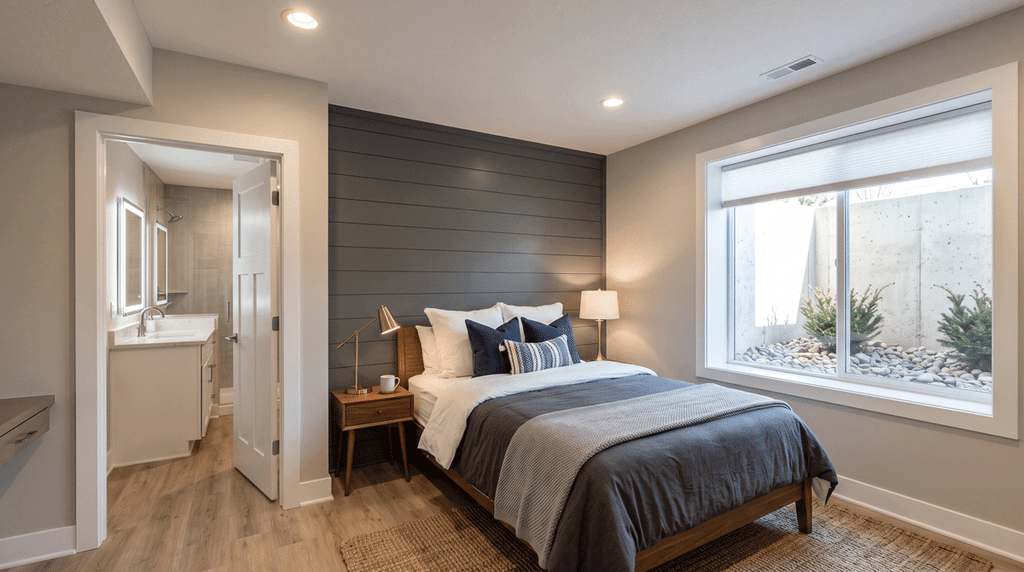
Added features. A basement bathroom significantly boosts both value and everyday usefulness. A bedroom with proper egress can add even more, since it may increase your home’s official bedroom count.
Moisture control. A dry, well-sealed basement reassures buyers and appraisers alike. Any sign of water issues dampness, staining, or a musty smell undercuts value quickly, no matter how nice the finishes are.
The local market. In areas like Richmond, Henrico, and Chesterfield, steady buyer demand for flexible living space supports strong returns on well-executed basement finishes.
Which Basement Uses Add the Most Value?
If maximizing resale value is a priority, some finishes pay off more than others:
- A basement with a full bathroom. Adds significant value and makes the entire space more functional and appealing to buyers.
- A legal bedroom with egress. Can increase your home’s official bedroom count, one of the most powerful factors in how homes are searched for, listed, and appraised.
- An in-law or guest suite. Highly appealing to multigenerational buyers and those who host frequently, and a strong differentiator in a listing.
- A flexible open living area. Universally attractive because buyers can picture their own use, whether that’s a media room, playroom, or home office.
By contrast, highly specialized finishes like a dedicated home theater or a single-purpose hobby room can be wonderful to live with but sometimes appeal to fewer buyers. If resale value is a priority, balance personal enjoyment with broad appeal.
The Key Requirement: It Has to Count as “Finished”
Here’s a detail many homeowners miss: a basement only adds to your home’s appraised value as living space if it genuinely qualifies as “finished” under local standards. That generally means finished walls, ceiling, and flooring, a permanent heat source connected to your home’s system, and proper, safe, code-compliant access.
A space that doesn’t meet these standards won’t be credited the way a properly finished basement is, which is exactly why doing the job correctly, with the right permits, protects your investment. Cutting corners to save a little upfront can quietly cost you far more when it’s time to sell and the space doesn’t appraise as a finished living area.
Finished vs. Unfinished: The Difference at Resale
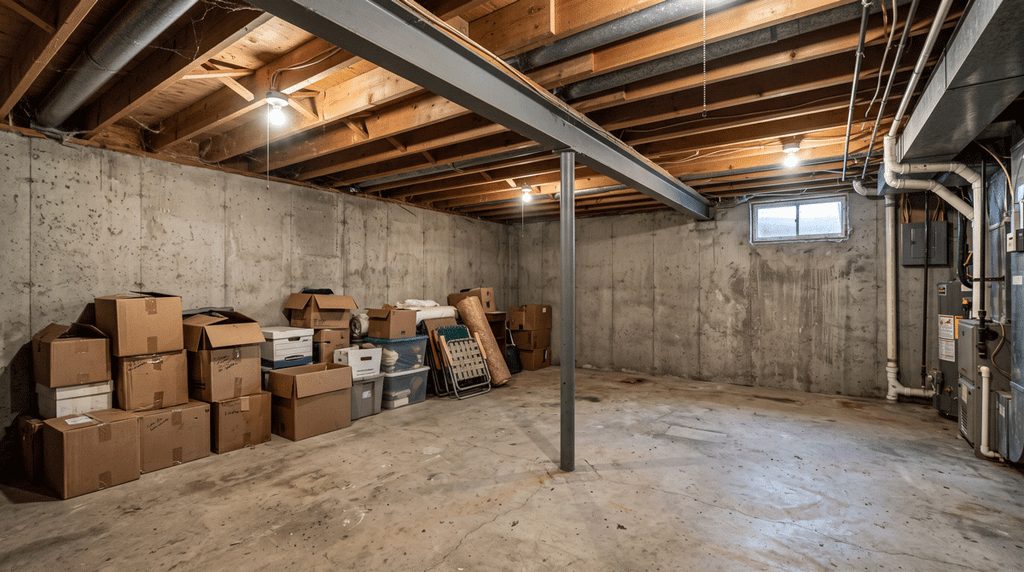
To see why finishing pays off, it helps to picture two nearly identical homes side by side on the Richmond market, same neighborhood, same square footage above grade, same price range. One has a bright, finished basement with a bathroom and a comfortable family room. The other has a bare, unfinished basement used for storage.
Buyers touring both homes react very differently. The finished basement reads as bonus living space they can use on day one at no cost, no contractor, no waiting. The unfinished basement reads as a project: something they’d have to budget for, plan, and endure. Given the choice, most buyers will favor the move-in-ready home, and many will pay a premium for it. That gap in buyer perception is where a finished basement earns its return, and it’s why the quality and completeness of the finish matter so much.
There’s also a speed-of-sale benefit that ROI figures don’t capture. Move-in-ready homes with usable bonus space tend to attract more interest and sell faster, which has its own real value when you’re trying to move on your own timeline.
Protect Your Investment With Professional Work
Because so much of a basement’s value depends on the quality and code-compliance of the finish, this isn’t the place to cut corners. Professional, permitted work ensures your basement counts as living space, passes inspection, controls moisture properly, and appeals to future buyers all the things that determine whether you actually see that 70–75% return.
At Swift Run Renovations, we finish basements across the Richmond area to standards that add real, lasting value, not just cosmetic improvement. We handle moisture control, egress, permitting, and finishing so your basement genuinely elevates your home’s worth. Explore our basement remodeling services in Richmond or our full range of remodeling services to see how we can help you invest wisely.
Ready to Add Value to Your Home?
A finished basement is one of the smartest investments you can make, adding usable space now and real value later. Contact Swift Run Renovations today for a free consultation and estimate, and let’s turn your basement into an asset that pays you back for years to come.
Frequently Asked Questions
How much value does a finished basement add?
A finished basement typically recovers about 70–75% of its cost at resale, while also giving you usable living space to enjoy in the meantime. In the Richmond market, where buyers value flexible space, a quality finished basement is a strong selling point that can help your home sell faster and for more.
Does a finished basement increase home value in Richmond, VA?
Yes. A professionally finished, code-compliant basement makes a home more attractive to buyers and can raise its sale price. The amount of value depends on the quality of the finish, whether the space legally counts as a living area, and added features like a bathroom or a legal bedroom with egress.
Does a finished basement count toward square footage?
It counts as a valuable finished living area only if it meets the definition of finished space: finished walls, ceiling, and flooring; a permanent heat source; and safe, code-compliant access. Because it’s below grade, it’s typically appraised separately as a below-grade finished area rather than added to above-grade square footage. Still, a proper finish is what earns that credit.
What adds the most value when finishing a basement?
Adding a full bathroom and a legal bedroom with proper egress typically adds the most value, followed by an in-law suite or a flexible open living area. Across all of these, quality permitted work and effective moisture control are essential to protecting and maximizing your return.